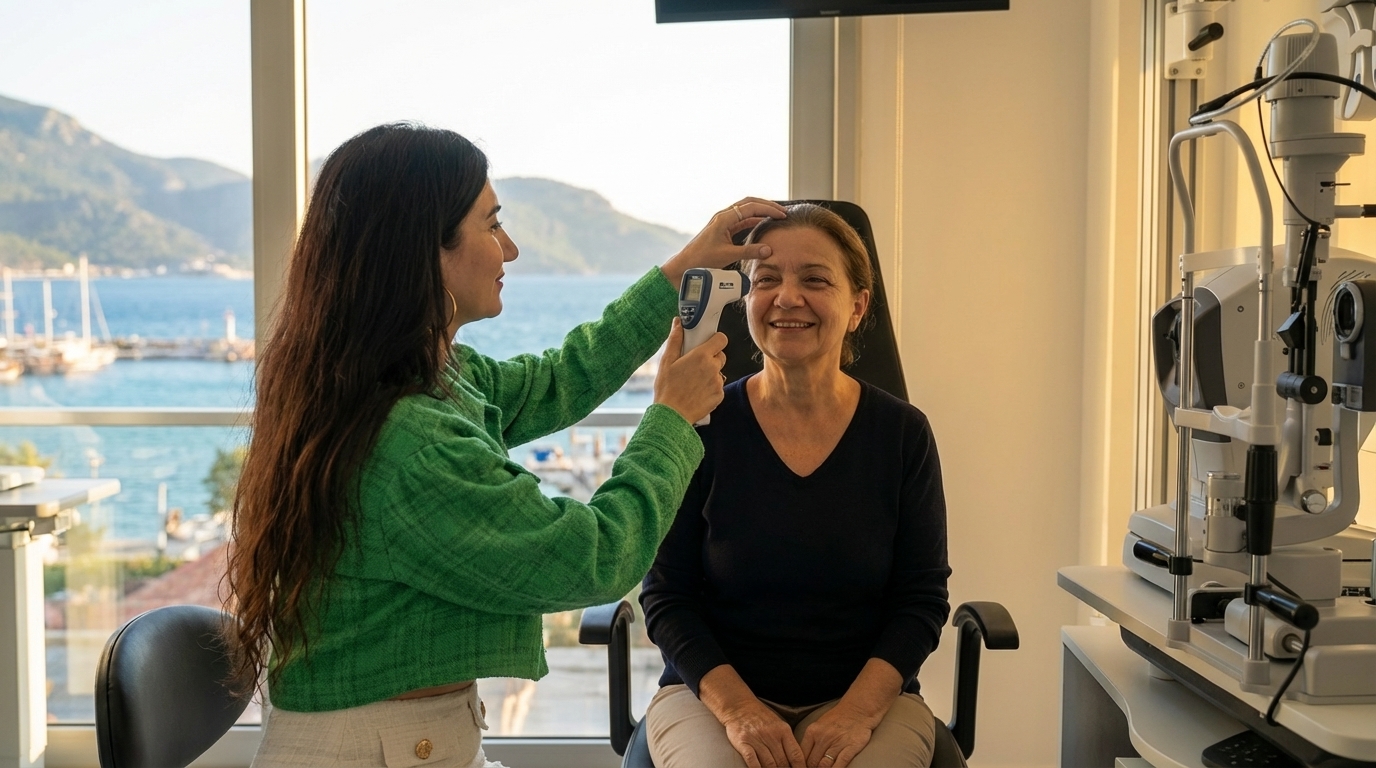
Glaucoma (Eye Pressure): The Silent Thief of Sight
Hello, I am Op. Dr. Gönül Fariz. I would like to inform you about glaucoma, commonly known as 'eye pressure' or 'black water' in society, a condition I frequently encounter at my clinic in Fethiye. Glaucoma is a serious eye disease that can lead to permanent vision loss by damaging the optic nerve. Its most dangerous aspect is that it usually presents no symptoms in the early stages. That's why we call it 'the silent thief of sight'.
What Exactly is Glaucoma?
Inside our eye, there is a fluid (aqueous humor) that is continuously produced and drained, maintaining the eye's shape. In glaucoma, a blockage occurs in the drainage pathways of this fluid, causing it to accumulate inside the eye. This accumulation increases the intraocular pressure (IOP). In individuals over 40, the normal intraocular pressure is typically between 10-21 mmHg. Consistently high pressure exerts force on the optic nerve, which is composed of millions of nerve fibers, causing these fibers to die over time. As a result, visual signals cannot be transmitted to the brain, leading to permanent loss in the field of vision.
Glaucoma Symptoms and Risk Factors
The most common type of glaucoma, 'Open-Angle Glaucoma,' initially shows no symptoms. As vision loss progresses slowly from the periphery to the center, the patient may only notice it in advanced stages. However, in some cases or in rarer types like 'Angle-Closure Glaucoma,' the following symptoms may appear:
- Blurred vision
- Seeing halos around lights
- Severe eye and head pain
- Nausea and vomiting
Who is at Risk?
- Individuals over the age of 40
- Those with a family history of glaucoma
- People with diabetes
- Those with high myopia or hyperopia
- Individuals on long-term cortisone treatment
- Those who have had an eye injury
How is Glaucoma Diagnosed in Fethiye?
A diagnosis of glaucoma can only be made through a detailed eye examination. At our clinic in Fethiye, we use internationally standardized tests for glaucoma diagnosis. This examination includes:
- Intraocular Pressure Measurement (Tonometry): The basic test to measure intraocular pressure.
- Corneal Thickness Measurement (Pachymetry): We measure the corneal thickness, which affects the accuracy of the pressure measurement.
- Visual Field Test: Detects whether there is any peripheral vision loss.
- Optical Coherence Tomography (OCT) of the Optic Nerve and Retina: Allows us to detect even the earliest damage by measuring the thickness of the optic nerve fibers at a micron level.
Glaucoma Treatment Methods
The primary goal of glaucoma treatment is to lower the intraocular pressure to stop the progression of optic nerve damage and preserve existing vision. Remember, vision lost to glaucoma cannot be recovered. Therefore, early diagnosis and regular treatment are vital.
1. Medication (Eye Drops)
The first line of treatment is usually eye drops. These drops work by either reducing the production of intraocular fluid or facilitating its outflow, thus lowering the pressure. It is very important to use the drops regularly every day at the times prescribed by your doctor.
2. Laser Treatment (SLT)
Selective Laser Trabeculoplasty (SLT) involves applying a low-energy laser to the drainage channels of the eye. This helps to open up the channels and allow the fluid to drain more easily. It is a painless procedure and can be used as an alternative or supplement to eye drops.
3. Surgical Treatment
In advanced cases where medication and laser treatments are not effective, surgical options are considered. Surgeries like trabeculectomy or glaucoma drainage devices (valves) create a new pathway for the intraocular fluid to drain out.
Frequently Asked Questions about Glaucoma
- 1. Can glaucoma be completely cured?
- No, glaucoma is a chronic disease and cannot be completely cured. However, with proper treatment, it can be controlled, and the progression of vision loss can be halted with a success rate of over 95%.
- 2. My eye pressure is normal, but can I still have glaucoma?
- Yes. In a type called 'Normal-Tension Glaucoma,' optic nerve damage can occur even though the intraocular pressure is within the normal range. Therefore, a pressure measurement alone is not sufficient; an optic nerve analysis (OCT) is also necessary.
- 3. Will I have to use glaucoma drops for life?
- Since glaucoma is a chronic disease, treatment is usually lifelong. However, methods like laser or surgery may reduce or eliminate the need for drops. This decision will be made by your doctor.
- 4. How often should I come for a glaucoma check-up in Fethiye?
- If you are not in a risk group, we recommend a check-up every 2 years after the age of 40. If you are in a risk group, an annual check-up is advised. Fethiye's sunny climate and lifestyle can affect eye health, so it is important not to skip regular check-ups.
- 5. Does glaucoma cause blindness?
- Yes, if left undiagnosed and untreated, glaucoma can lead to permanent blindness. It is the second leading cause of preventable blindness worldwide. With early diagnosis and regular follow-up, the risk of blindness can be largely prevented.
Remember, your eyesight is one of your most precious assets. Especially if you are over 40 or have a family history of glaucoma, do not neglect to have regular eye exams, even if you have no complaints. I wish you healthy days.
Medical review
Reviewed by: Op. Dr. Gönül Fariz · March 16, 2026
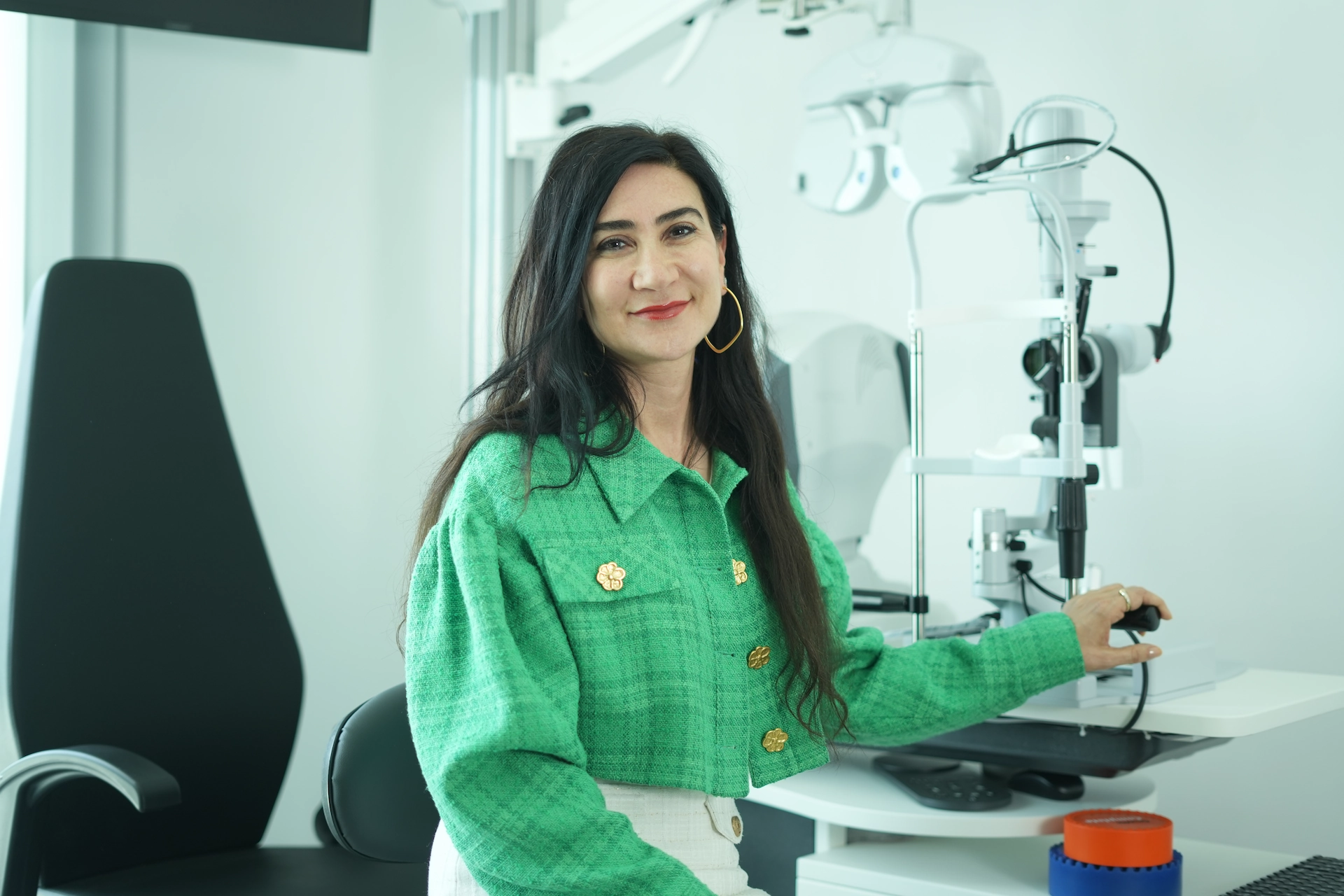
Op. Dr. Gönül Fariz
Göz Hastalıkları Uzmanı